



![[Alan B. Shepard, Jr.]](shepard.gif)
![[NASA Logo]](meatball.gif)
Lyndon B. Johnson Space Center
Houston, Texas 77058
In 1950, he attended the United States Navy Test Pilot School at Patuxent River, Maryland. After graduation, he participated in flight test work which included high altitude tests to obtain data on light at different altitudes and on a variety of air masses over the American continent; and test and development experiments of the Navy's in-flight refueling system, carrier suitability trials of the F2H3 Banshee, and Navy trials of the first angled carrier deck. He was subsequently assigned to Fighter Squadron 193 at Moffett Field, California, a night fighter unit flying Banshee jets. As operations officer of this squadron, he made two tours to the Western Pacific on board the carrier ORISKANY. He returned to Patuxent for a second tour of duty and engaged in flight testing of the F3H Demon, F8U Crusader, F4D Skyray, and FllF Tigercat. He was also project test pilot on the F5D Skylancer, and his last five months at Patuxent were spent as an instructor in the Test Pilot School. He later attended the Naval War College at Newport, Rhode Island, and upon graduating in 1957 was subsequently assigned to the staff of the Commander-in-Chief, Atlantic Fleet, as aircraft readiness officer.
He has logged more than 8,000 hours flying time, including 3,700 hours in jet aircraft.
In 1963, he was designated Chief of the Astronaut Office with responsi-bility for monitoring the coordination, scheduling, and control over all activi-ties involving NASA astronauts. This included monitoring the development and implementation of effective train-ing programs to assure the flight read-iness of available pilot/nonpilot personnel for assignment to crew posi-tions on manned spaceflights; furnish-ing pilot evaluations applicable to the design, construction, and operations of spacecraft systems and related equip-ment; and providing qualitative scien- tific and engineering observations to facilitate overall mission planning, formulation of feasible operational procedures, and selection and conduct of specific experiments for each flight. He was restored to full flight status in May 1969, following correc-tive surgery for an inner ear disorder.
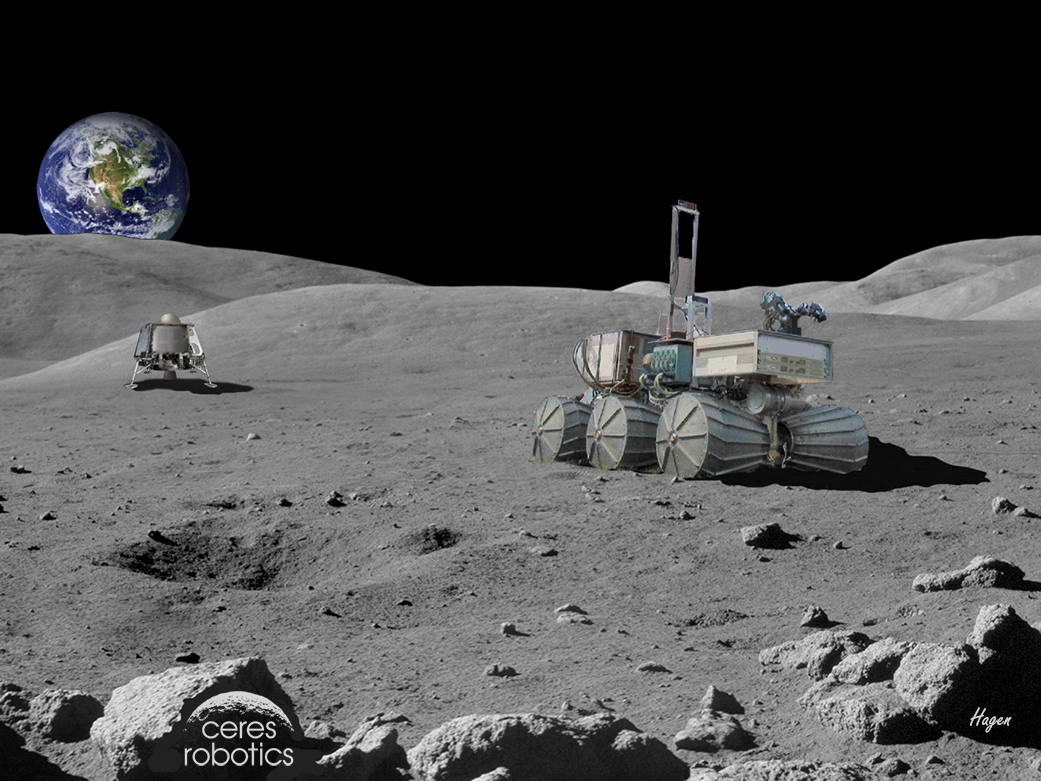
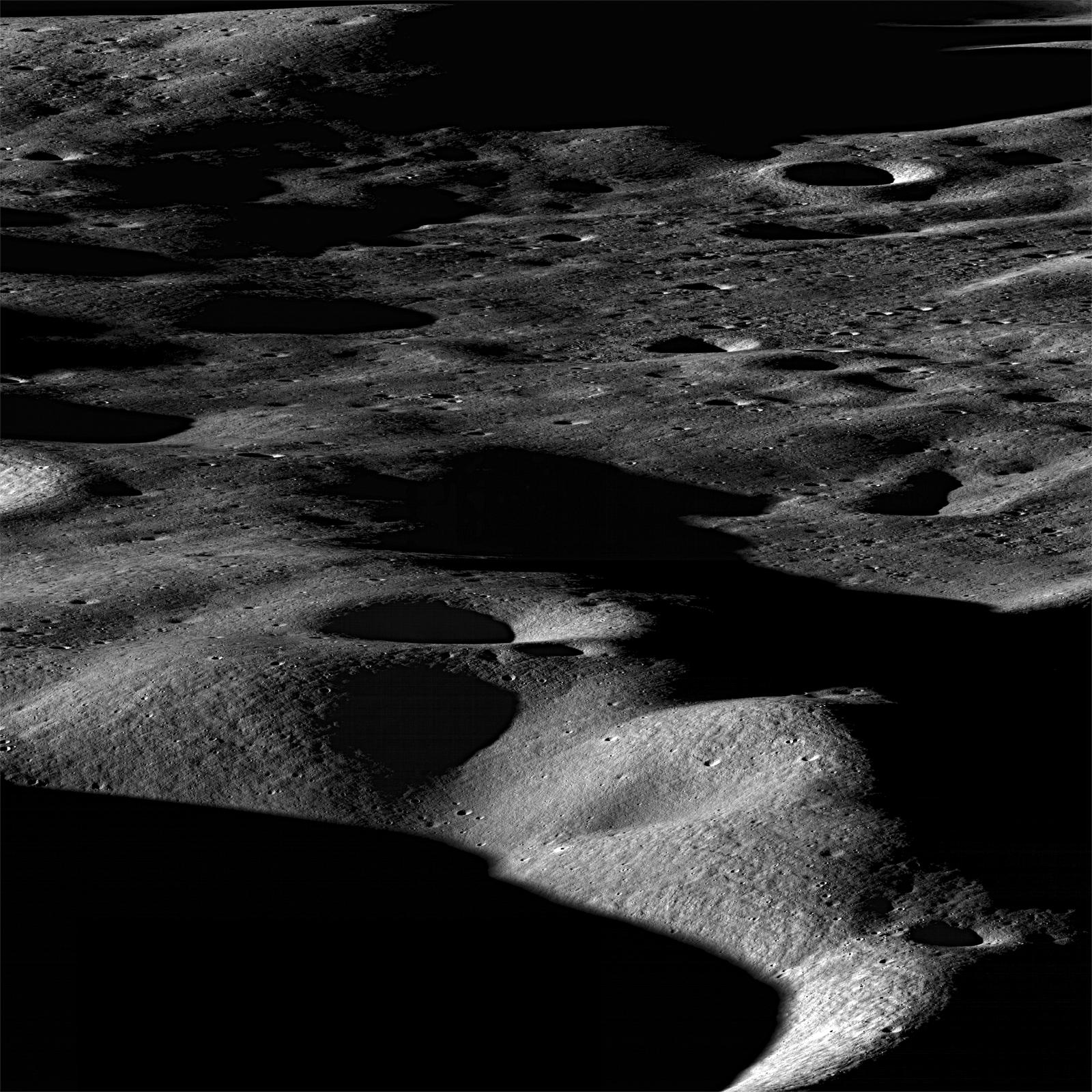
Shepard made his second space flight as spacecraft commander on Apollo 14, January 31 - February 9, 1971. He was accompanied on man's third lunar landing mission by Stuart A. Roosa, command module pilot, and Edgar D. Mitchell, lunar module pilot. Maneuver-ing their lunar module, Antares, to a landing in the hilly upland Fra Mauro region of the moon, Shepard and Mitchell subsequently deployed and activated various scientific equipment and experiments and collected almost 100 pounds of lunar samples for return to earth. Other Apollo 14 achievements included: first use of Mobile Equipment Transporter (MET); largest payload placed
in lunar orbit; longest distance traversed on the lunar surface; largest payload returned from the lunar surface; longest lunar surface stay time (33 hours); longest lunar surface EVA (9 hours and 17 minutes); first use of shortened lunar orbit rendezvous techniques; first use of colored TV with new vidicon tube on lunar surface; and first extensive orbital science period conducted during CSM solo operations.
Shepard has logged a total of 216 hours and 57 minutes in space, of which 9 hours and 17 minutes were spent in lunar surface EVA.
He resumed his duties as Chief of the Astronaut Office in June 1971 and served in this capacity until he retired from NASA and the Navy on August 1, 1974. He is currently in private business in Houston, Texas.
SPECIAL ASSIGNMENT: Shepard was appointed by the President in July 1971 as a delegate to the 26th United Nations General Assembly and served through the entire assembly which lasted from September to December 1971.
ARCHIVAL BIOGRAPHY