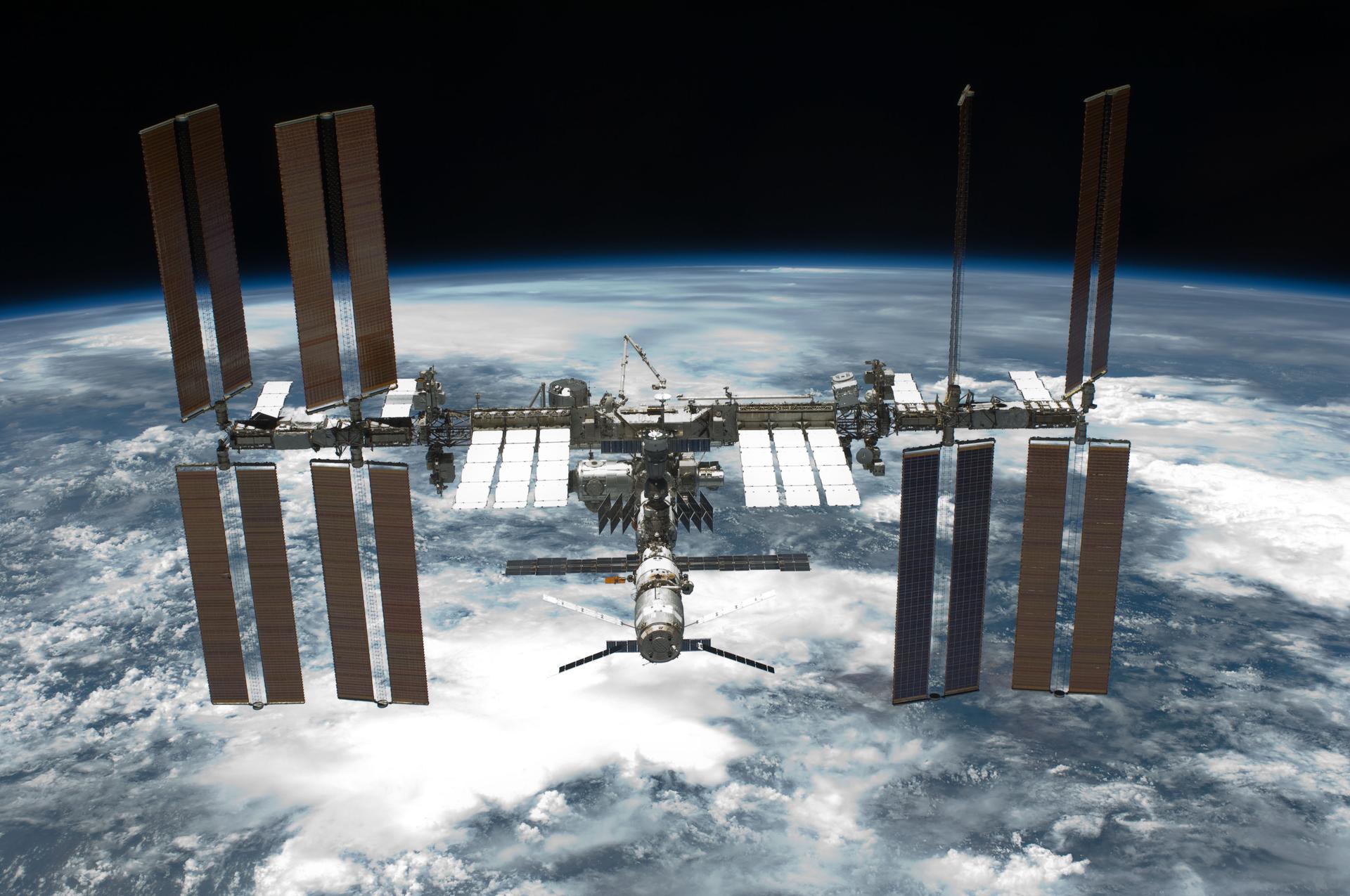
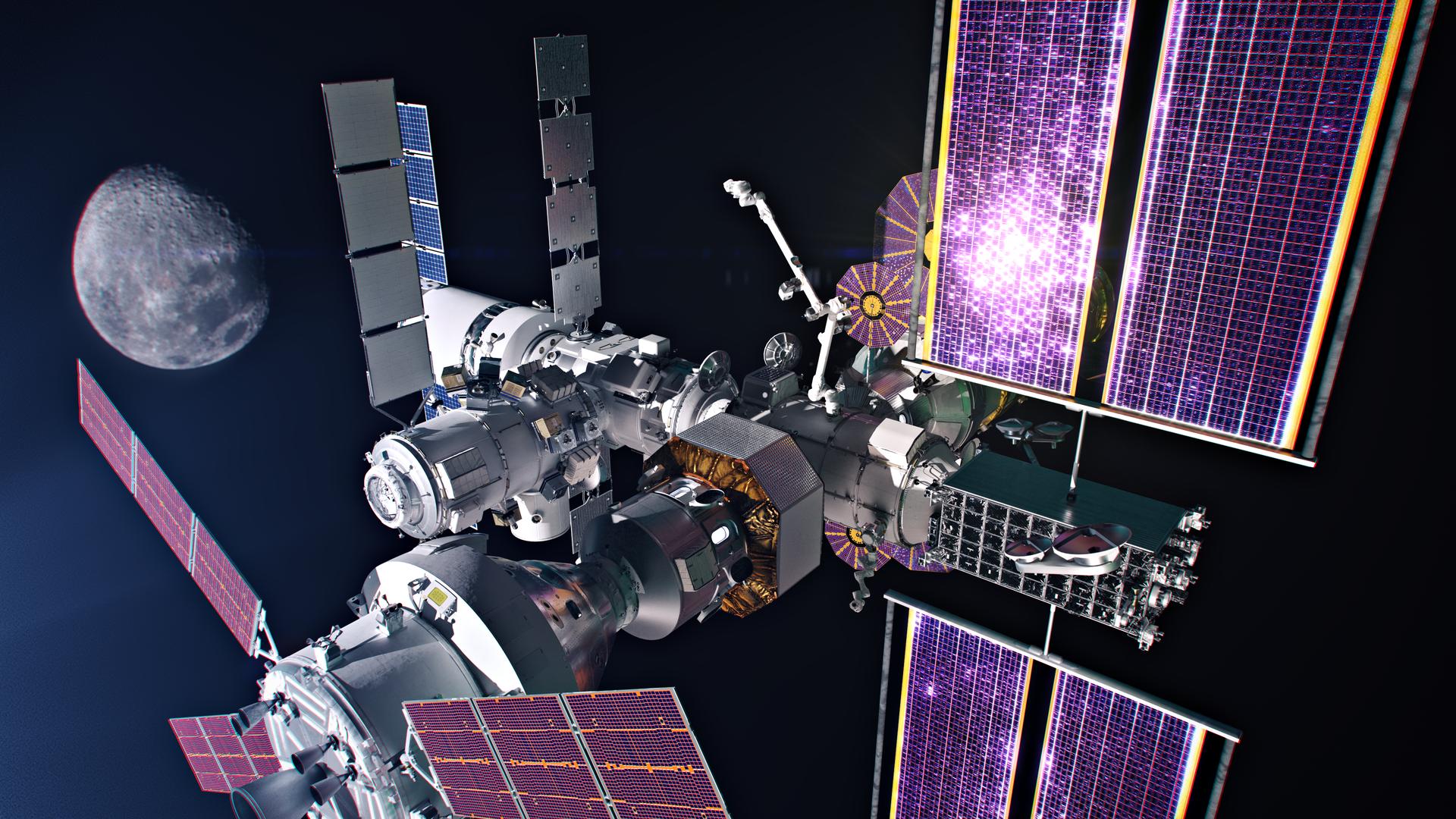



Description: The painting below called THE JOURNEY has the theme of exploration and settlement of the solar system which starts in Earth orbit from a space station, continues on the Moon, and finally reaches Mars.
Description: The painting called OBERTH ASCENDING depicts a reusable Lunar Lander called OBERTH leaving a lunar outpost (base). Because the base is not at first self-sufficient, the lander must perform routine flights to resupply the outpost.
Description: The picture shows a rocket inserting a Mars transfer vehicle into orbit. The postulated rocket is a nuclear thermal type which would be able to shorten the transit time from Earth to Mars as well as lower the mass boosted from Earth. The rocket's reactor would be inert until ignited in deep space for thrust of its payload to Mars.
Description: The painting is of Mars astronauts exploring the Noctis Labyrinthus canyon of Mars. The setting is just after sunrise when an early morning fog might hide the bottom of the canyon nested miles below the explorers' elevation. The exploration of geological and meteorological features of Mars has the potential of improving understanding of Earth.
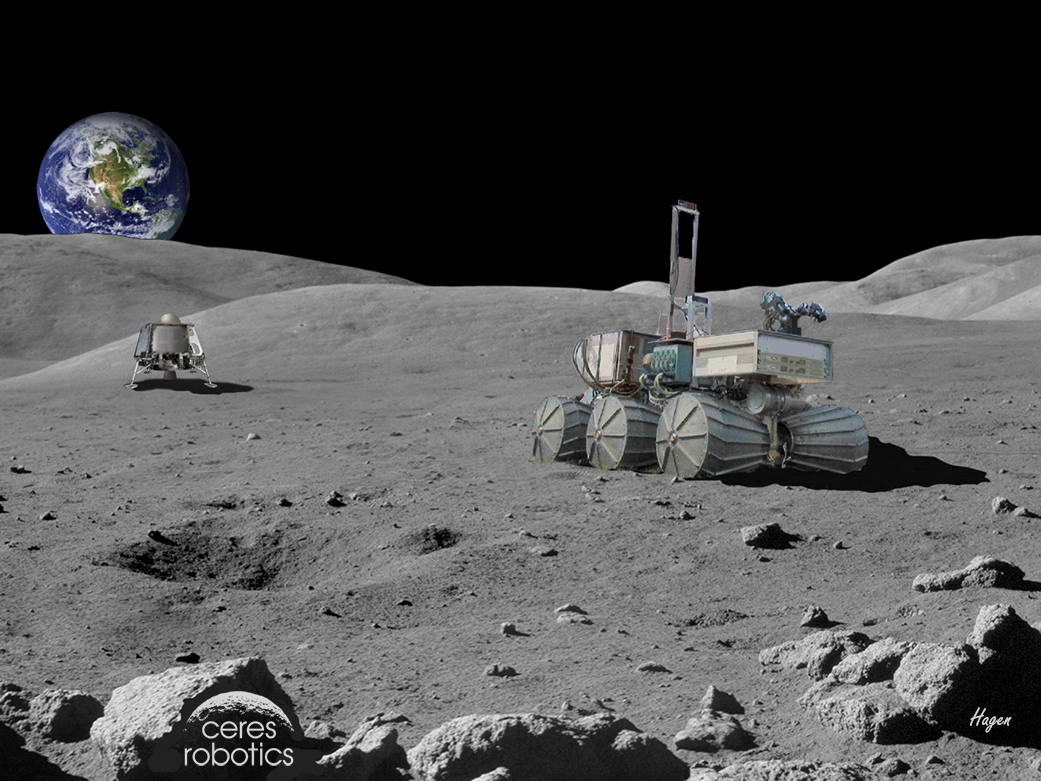
Description: The painting is of members of a lunar expedition planning their next investigation site from a lunar roving lab. Within the lunar vehicle is scientific analysis equipment for evaluating lunar samples at the site.
Description: Two Mars astronauts repair the Mars sample return rover's wheel motors. By refurbishing the machine, added hours of teleoperated performance would be available to Mars researchers.
Description: The trip home from Mars features a two-stage lander concept which is shown here soaring through the atmosphere of Mars after completing a year's stay on the planet's surface. The base shown is near the planet's equator and a tributary of Valles Marineris which is in the region of the Viking I landing site.
Description: A robotic rover is shown after being landed on the Moon's surface by the Artemis lunar landing stage. About the size of a compact car, the Artemis is simple and automated, designed to launch small payloads to the Moon via expendable Earth launch vehicles.
Description: The painting shows a nuclear thermal transfer vehicle preparing to dock with a lunar lander. The transfer vehicle has just passed from sunlight into the shadow of the Moon (illuminated only by reflected light from Earth). Via a sequential building block approach, a Mars transfer rocket/vehicle could be fabricated from parts used by the lunar stage.
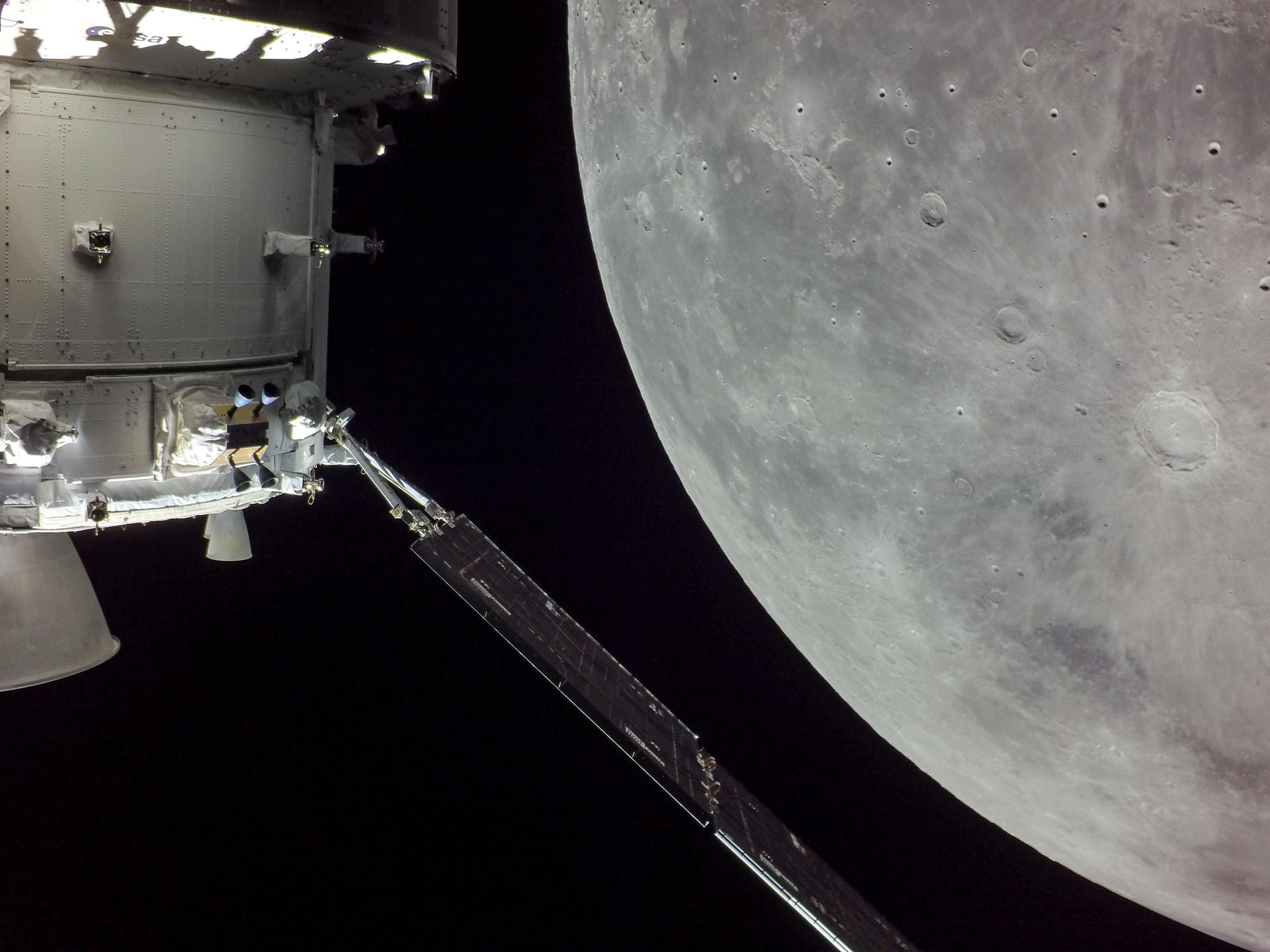
Description: The Moon is but a three day rocket journey from Earth. There hardware and operations could be tested for a manned mission to Mars. A modified Mars lander could be tested on a simulated mission using the Moon as the simulated planetary landing site.
Description: Since Mars has an atmosphere (though thin), parachutes could be used to abruptly slow the first Mars expedition vehicle's descent to the planet's surface. The destination depicted is the floor of Ganges Chasma.
Description: The painting is the artist's conception of how a space university classroom of the future might appear.
Description: After the Mars astronauts have driven a few miles from their Ganges Chasma landing site on Mars, the pair of Mars explorers pauses to examine a robotic lander and its rover, . The location of the stop is near the original landing site. Here, the crew checks out their life support systems. If difficulties are found, the return to the mother vehicle is but a short walk.
Subject: The pictures below are an artist's portrayal of a space habitat where 10,000 people work, raise families, and live out normal human lives. Shown is a wheel-like structure in which they live. This structure orbits the Earth in the same orbit as the Moon in a stable position that is equi-distant from both Earth and Moon. This is called the Lagrangian libration point, L5. The habitat consists of a tube 130 m (427 ft) in diametral cross section bent into a wheel 1790 m ( over 1 mi ) in diameter. The people live in the ring-shaped tube which is connected by six large access routes (spokes) to a central hub where incoming spacecraft dock. These spokes are 15 m (48 ft) in diameter and provide entry and exit to the living and agricultural areas in the tubular region. To simulate Earth's normal gravity the entire habitat rotates at one revolution per minute about the central hub.
Much of the interior of the habitat is illuminated with natural sunshine. The Sun's rays in space are deflected by a large stationary mirror suspended directly over the hub. This mirror is inclined at 45 degrees to the axis of rotation and directs the light onto another set of mirrors which, in turn, reflect it into the interior of the habitat's tube through a set of louvered mirrors designed to admit light to the colony while acting as a baffle to stop cosmic radiation. With the help of abundant natural sunshine and controlled agriculture, the colonists are able to raise enough food for themselves on only 63 ha (156 acres). The large paddle-like sturcture below the hub is a radiator by which waste heat is caried away from the habitat.
Abundant solar energy and large amounts of matter from the Moon are keys to successfully establishing a community in space. Not only does the sunshine foster agriculture of unusual productivity, but also it provides energy for industries needed by the colony. Using solar energy to generate electricity and to power solar furnaces the colonists refine aluminum, tatanium, an silicon from lunar ores shippped inexpensively into space. With these materials they are able to manufacture satellite solar power stations and new colonies. The power stations are placed in orbit around the Earth to which they deliver copious and valuable electrical energy. The economic value of these power stations will go far to justify the existence of the colony and the consturction of more colonies.
Click here to continue with: NASA Gemini Program Space Art.
Click here to continue with: NASA Apollo Program Space Art
Click here to continue with: NASA Space Shuttle Program Space Art
Click here to continue with: NASA Advanced Exploration Program Art.
Click here to return to the NASA Space Art Home Page.
Click here to return to the SPACE EDUCATORS' HANDBOOK HOMEPAGE.